
Venice lagoon islands
From Fondamente Nove, boats head north towards Murano and Burano. The Lido lies further south, between the lagoon and the open sea, on a different route.
On this page
Murano for glass, Burano for lace
On Murano, canals run between glassmakers’ workshops. The Museo del Vetro displays glass from antiquity to modern work. A furnace demonstration is a separate experience from a museum visit; leave time on the island if you want both.
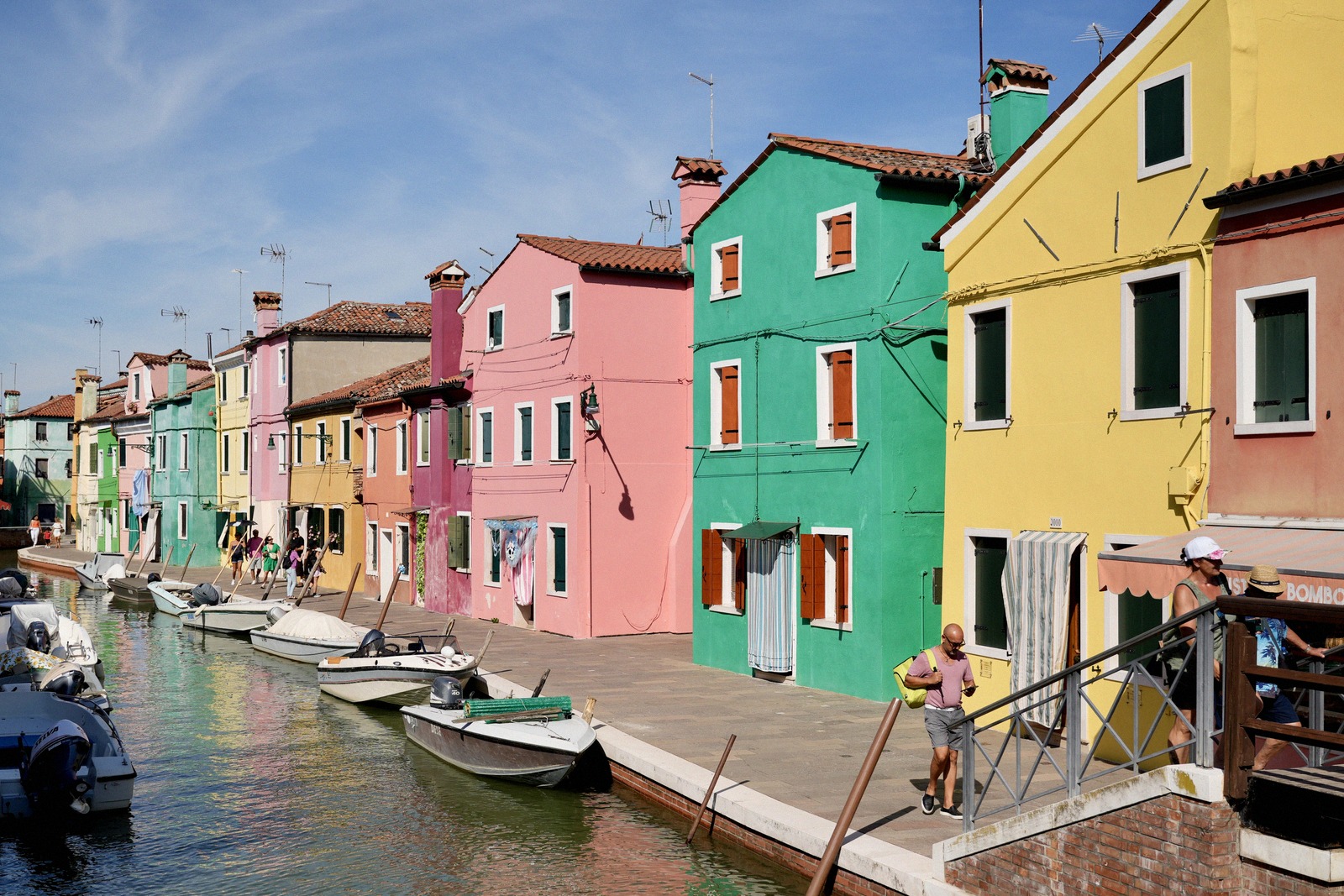
On Burano, colourful houses line the canals. For the island’s craft tradition, head to Piazza Galuppi. A lace school opened here in the 19th century. The Museo del Merletto occupies its former rooms and shows how individual stitches create elaborate patterns. If you have time for only one island museum, choose between glass and needle lace.
Continuing from Burano to Torcello
Line 12 runs from Venice’s northern waterfront via Murano to Burano. Torcello is a separate stop. Only selected line 12 sailings call there; other journeys require a change at Burano. Read the stopping pattern for the particular departure, especially when returning in the evening.
Torcello tells the story of the lagoon before political power centred on St Mark’s Square. Its island museum holds archaeological finds and medieval art. It makes a useful extension from Burano if early lagoon settlement interests you. Murano and Burano already fill a day if you want substantial time inside their museums.
The Lido for the seaside
The waterbus arrives on the lagoon side of the Lido. From Santa Maria Elisabetta landing stage, Gran Viale crosses the island towards the beach and the Adriatic. Villas and hotels along the way date from its development as a seaside resort. Unlike historic Venice, the Lido has cars and buses.
Boats from the St Mark’s basin head towards the Lido. From the railway station, line 1 makes the journey itself part of the outing, following the Grand Canal before continuing to the island.